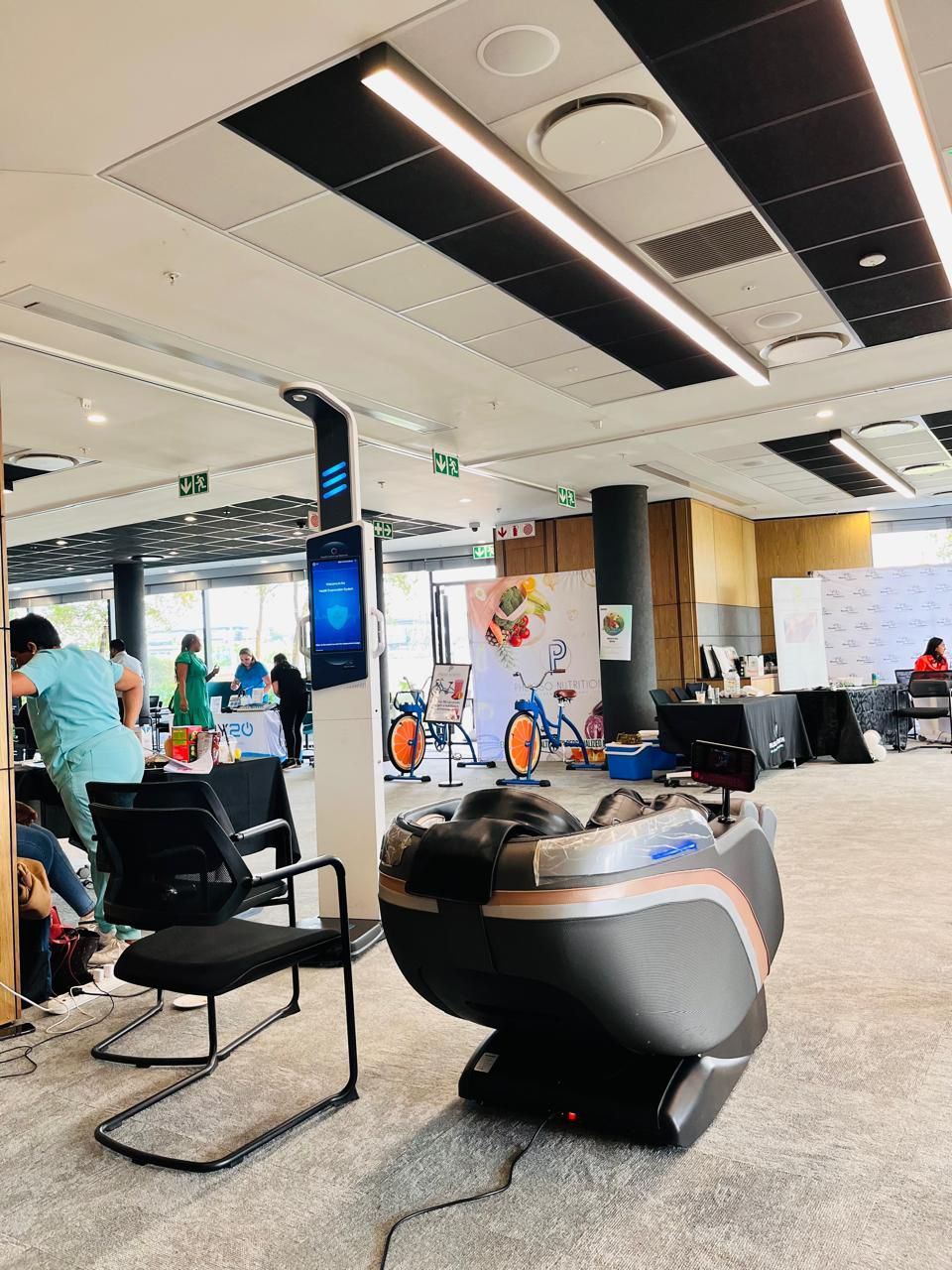
In post-event surveys across hundreds of South African corporate wellness days, one activation consistently scores highest: chair massages. The reasons aren't mysterious — they're behavioural, and they tell HR teams something important about how to design wellness programmes that staff actually use.
Reason 1: The barrier is zero
Employees love chair massages because they don't have to do anything. No change of clothes. No shower afterwards. No prior fitness or experience. No public exercise anxiety. No commitment beyond 15 minutes. The friction that kills uptake on yoga, meditation, gym memberships and lunchtime fitness disappears entirely.
HR lesson: high-uptake wellness benefits are low-friction wellness benefits.
Reason 2: The benefit is immediate and physical
Chair massages deliver something staff can feel within 90 seconds. The release of neck and shoulder tension is unmistakable, the calm comes within minutes, and the energy lift lasts through the afternoon. Compare that to a meditation app or a stress-management webinar, where the benefit is delayed, abstract and hard to perceive.
Reason 3: It feels like the company is spending money on them
A chair massage feels expensive. The therapist, the chair, the time — it reads as 'the company actually spent something to give me this'. That perception drives a disproportionate engagement-survey lift, and is the reason chair massages outperform per-rand on the 'company cares about my wellbeing' question.
Reason 4: It's a legitimate break from work
South African corporate culture makes mid-day breaks awkward — taking 30 minutes for a walk reads as slacking, while taking 15 minutes for a chair massage reads as participating in wellness. The activation gives staff permission to step away from their desk in a way that lunch breaks and coffee runs don't.
Reason 5: The social-experience layer
Chair massages happen in a public, low-key wellness room or boardroom corner. Staff queue together, chat about how stressed they are, share the experience and walk out together. That shared social moment is part of the appeal.
The design takeaway for HR
If you're redesigning your wellness programme around what staff actually use, chair massages are the template: low friction, physical and immediate, perceived as valuable, socially sanctioned, with a built-in shared experience. Apply those five filters to every wellness budget line, and your engagement scores will look very different next year.