Start by deciding whether every employee needs to visit every station or whether people can choose the activities they're interested in. That answer shapes your schedule and staffing.
A staff wellness day for 50 people can run from a single room with a relaxed flow. At 200 people, the same plan creates queues, empty desks and frustrated managers. The difference is not only the number of stations you book. It is how you spread people across the day, which services need appointments and how much space you can give each activity.
This guide walks HR and office managers through planning a corporate wellness day at three common sizes, with practical examples for workplaces in Johannesburg, Gauteng and across South Africa. The numbers below are planning examples, not fixed rules. Station capacity always depends on your schedule and the services booked.
The first decision: every station or free choice?
If every employee should visit every station, you are planning a circuit. Each person's total time away from work is the sum of every station plus walking and waiting, so you need enough capacity at the slowest station to keep the circuit moving. Appointment-based services, such as a chair massage or a health check, usually set the pace.
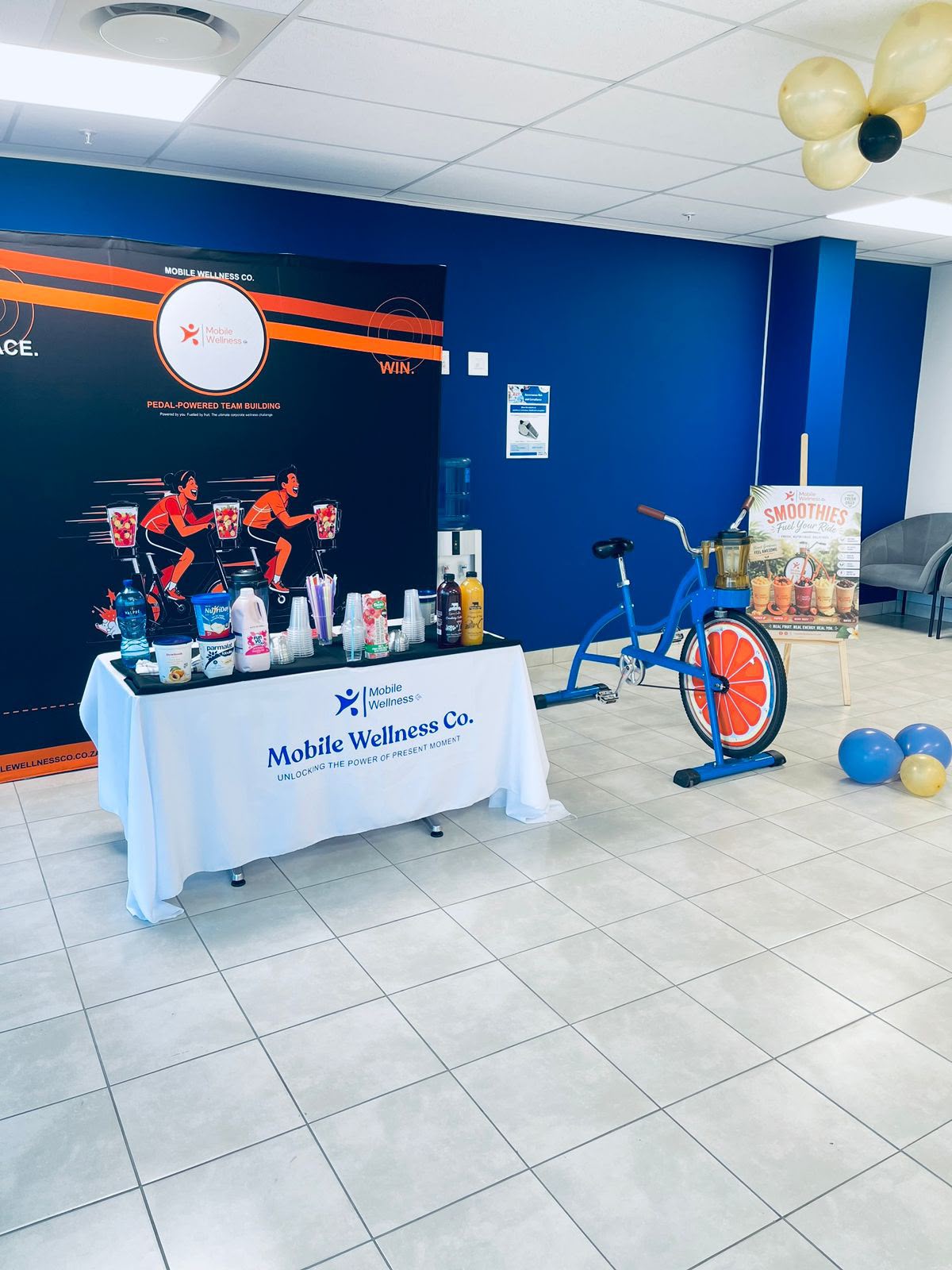
If employees can choose, you are planning a festival-style day. Drop-in stations such as a smoothie bike or a team game can handle people arriving at different times, and you only need appointments for the services that require one-on-one time. Most workplaces end up with a mix: one or two services everyone is encouraged to use, and a few optional activities.
50, 100 and 200 employees at a glance
| Headcount | Typical format | Scheduling approach | Watch out for |
|---|---|---|---|
| 50 employees | One shared activity plus one or two stations | Open flow, with timed slots for individual services | Booking more stations than people will use |
| 100 employees | Several stations running in parallel | Staggered arrival by department or floor | Everyone arriving at lunch at the same time |
| 200 employees | Parallel stations planned around teams or shifts | Team or shift time blocks, with appointment lists | Shift workers missing out on screenings or massage |
Planning for 50 employees
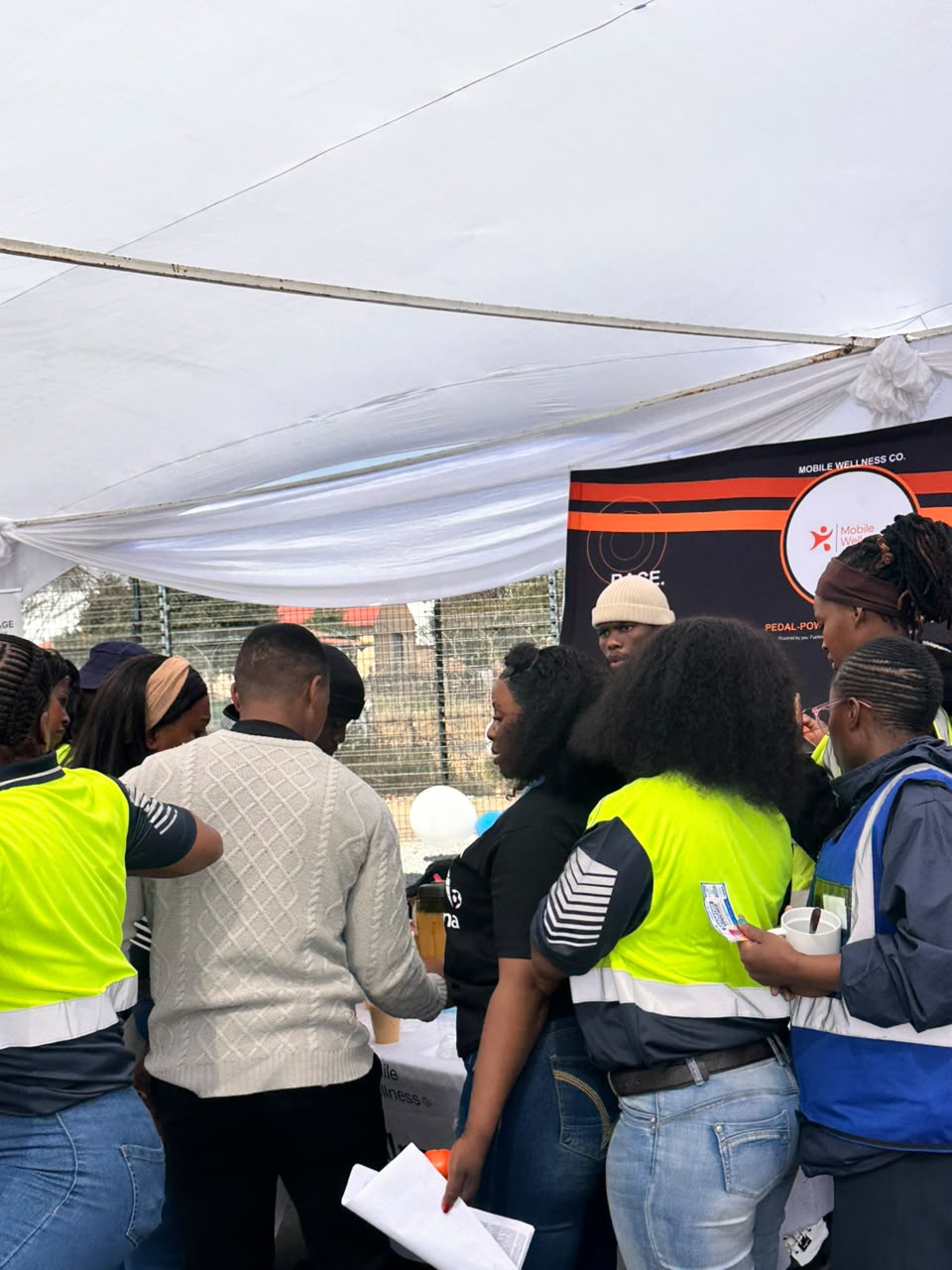
For 50 employees, consider a shared activity and one or two stations, with timed slots for individual services. A shared activity gives the day a focal point and gets colleagues talking. That could be a smoothie bike that people take turns to pedal, a quick team challenge or a short wellness talk.
Add one service that gives people individual time, such as on-site chair massage or a health check station. With 50 people, a simple appointment list on a shared spreadsheet or a sign-up sheet at reception is usually enough. Keep a few open slots for people who decide on the day.
- Use one room or one outdoor area so the event feels busy rather than empty.
- Run the day for a half-day window rather than spreading 50 people thinly over eight hours.
- Ask managers to release people in small groups so no team is left without cover.
Planning for 100 employees
For 100 employees, run stations in parallel and stagger arrival times. At this size, the main risk is a rush: everyone arrives at 12:30, the queues grow and people return to their desks before trying anything.
Give each department or floor an arrival window, for example 30 to 45 minutes each, and share it in the calendar invite. Place drop-in stations near the entrance and appointment-based services in a quieter spot, so queues for one activity do not block another. If you want everyone to have access to a specific service, check that the number of practitioners and the length of each appointment add up to your headcount before you confirm the day.

Planning for 200 employees
For 200 employees, plan around teams or shifts, especially if you want everyone to have the chance to attend a screening or massage. Large groups move more predictably when they arrive in defined blocks. Shift-based workplaces such as warehouses, contact centres and manufacturing sites may need the stations to stay open across shift changes, or to run over two days.
- Create time blocks per team or shift, and publish them before the day.
- Use separate appointment lists for each service that needs one, and send reminders.
- Have a host at the entrance to direct people to stations with shorter queues.
- Plan breaks for practitioners and facilitators so stations do not close unexpectedly.
If your workforce is larger than 200, see our guide on planning a corporate wellness day for 500+ employees.
How to work out station capacity
You do not need a complicated model. For any appointment-based station, use this simple calculation:
- Decide how many employees you want the station to serve.
- Multiply by the length of one appointment, including changeover time.
- Divide by the number of hours the station is open. That gives you the number of practitioners needed, before breaks.
For example, 60 chair massage appointments of 10 minutes each need 600 minutes, or 10 practitioner-hours. Over a five-hour window, that means two therapists before breaks and changeovers. Drop-in stations work differently: the question is how many people arrive at once, not how many attend in total. For smoothie bikes, our guide on how many smoothie bikes you need covers serving windows in more detail.
Space and venue checklist
- A quiet, private area for chair massage or any health check.
- Power points near stations that need them, and a table for each station.
- Flat, open floor space for smoothie bikes and team games.
- Shade and an indoor backup plan if the event is outdoors.
- Loading access, parking and visitor registration details for the setup team.
- A clear route between stations so queues do not block doors or walkways.
Telling employees what to expect
Participation depends on people knowing what is on offer and when they can go. Send a short message a week before the event and a reminder on the day. Include the time windows, which services need booking, how to book and that taking part is voluntary. If you would like more ideas on encouraging people to join in, read how to increase wellness day participation.
What to send for a quote
A useful quote request includes your headcount, the address, working hours or shift times, the date, the activities you would like and whether everyone should visit every station. Tell us which activities are essential and which are optional, so we can suggest a setup that fits your priorities.
Frequently Asked Questions
How many stations do I need for a staff wellness day for 50 employees?
Many 50-person events work well with one shared activity and one or two stations, with timed slots for individual services such as chair massage. The right number depends on how long the event runs and which services you book.
How do I stop queues at a wellness day for 100 employees?
Run stations in parallel and give each department or floor its own arrival window. Use appointment lists for services that need one-on-one time, and place drop-in stations away from appointment areas.
How do I include shift workers in a wellness day for 200 employees?
Plan around teams or shifts. Keep key stations open across shift changes or spread the event over two days, and publish the time blocks before the day so supervisors can release people.
Does every employee need to visit every station?
No. You can plan a circuit where everyone visits each station, or let employees choose. The choice affects how many practitioners and how much time you need, so decide it before requesting a quote.
What information does Mobile Wellness Co need to quote a staff wellness day?
Send your headcount, address, date, working hours or shift times, preferred activities and which ones are essential. We will suggest an event flow and quote for staffing and equipment.