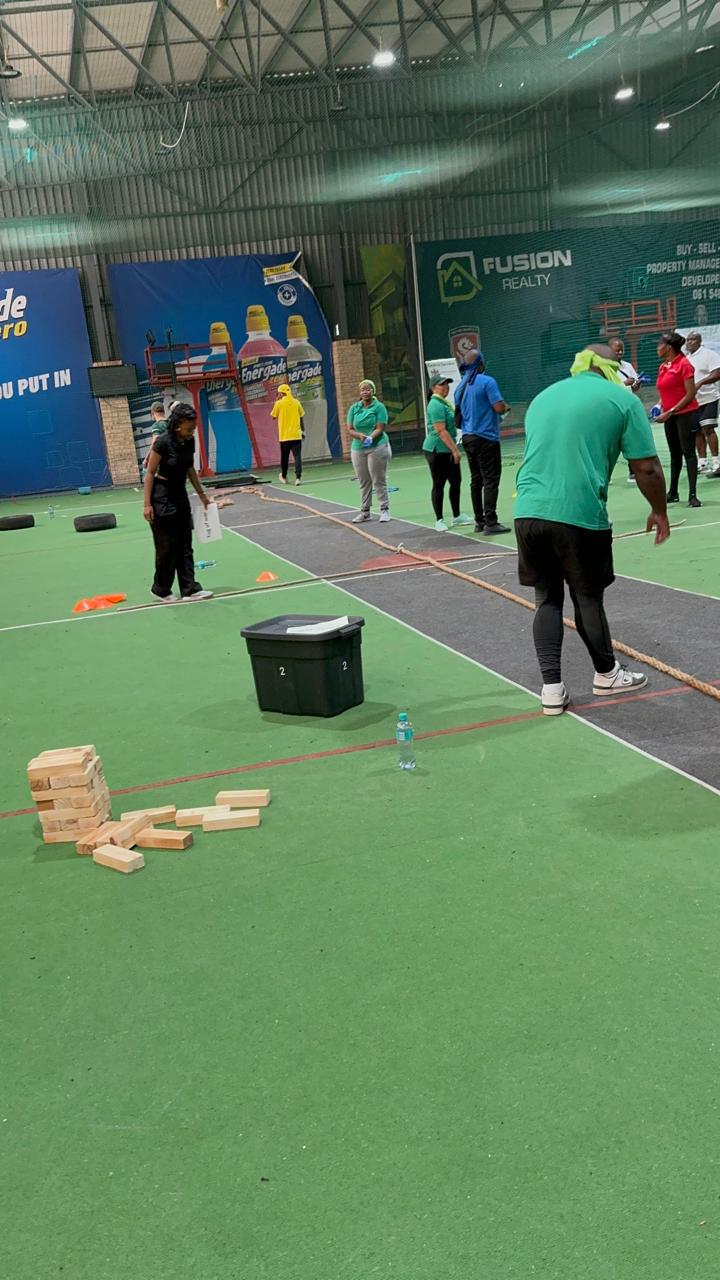
Planning a corporate team-building day for the first time is intimidating. There are venue decisions, supplier decisions, activity decisions, budget decisions, internal-comms decisions, and post-event reporting decisions. This guide walks through each step in the order an experienced HR planner would actually approach it.
Step 1: Define the real goal
Before anything else, write down — in one sentence — what success looks like. Common goals: (1) lift cross-team connection after a merger, restructure or period of growth. (2) Reset team morale after a hard quarter. (3) Celebrate a specific achievement (project ship, milestone, anniversary). (4) Run the annual culture moment (year-end function, wellness day). The goal drives every subsequent decision.
Step 2: Confirm headcount and date
Headcount has the biggest impact on cost and format choice. Date drives availability — peak periods (year-end Nov to Dec, Heritage / Women's / Mandela Day weeks) require 6-12 weeks of lead time. Don't go further until both are reasonably firm.
Step 3: Set the budget envelope
Indicative SA team-building budget norms (2026): R250-R400 per head for a half-day office activation, R450-R700 per head for a full-day combined wellness and team-building event, R600-R1,200 per head for a year-end function with food and music. Multiply by headcount, get a rough envelope.
Step 4: Decide indoor / outdoor / on-site / off-site
Indoor on-site (your office): cheapest, simplest, lowest weather risk. Indoor off-site (conference hotel): mid-range, more event-feel, harder logistics. Outdoor on-site (your parking lot or grounds): energy-rich, weather-risky. Outdoor off-site (lodge or park): premium feel, highest logistical cost.
Step 5: Choose the activity mix
For a half-day with 60 plus staff, choose 3-4 activities to rotate through (smoothie bikes plus Office Olympics plus photobooth is our most-booked combo). For a 2-hour session with under 30 staff, choose 1-2 activities (smoothie bikes alone, or sip and paint alone, are both excellent).
Step 6: Shortlist 3 suppliers and brief them
Send the same brief to 3 suppliers to enable fair comparison. The brief should include: goal, headcount, date, venue, activity preference, budget envelope (sharing this gets better quotes than withholding), procurement requirements (B-BBEE, tax clearance, PO format).
Step 7: Evaluate and select supplier
Evaluate on: portfolio (real photos, not stock), facilitator quality, inclusivity of format design, scalability to your headcount, weather-backup plan, public liability cover, B-BBEE credentials, references from existing clients, and (importantly) responsiveness during the quoting process. The supplier who responds slowly during the sales cycle will respond slowly during the event.
Step 8: Confirm booking and pay deposit
Standard SA deposit is 30% to confirm the date. Once paid, get the run-sheet, on-site requirements list, facilitator details and the supplier's on-the-day contact in writing.
Step 9: Internal comms (2-4 weeks before)
The biggest single driver of event success is staff turnout. The biggest single driver of staff turnout is internal communication. Send a 'save the date' 4 weeks before, a full programme email 2 weeks before, and a 'see you there' reminder 2 days before. Include the why, the what, the where, the when, the dress code and any sign-up requirements.
Step 10: On the day — focus on the moments that matter
Your job on the day is not to run the event — that's the supplier's job. Your job is to manage three moments: the opening (welcome, set the tone, brief the energy), the recognition moment (if any awards or thanks are happening, get this right), and the close (gratitude, what's next, send people home well). Delegate everything else.
Step 11: Post-event reporting (1-2 weeks after)
Run a short post-event survey (5 questions max). Compile photos and videos from the supplier into a 1-page internal recap. Track the engagement signal at the next survey cycle. Report back to whoever approved the budget with the survey numbers and the engagement-signal projection.
Step 12: Plan the next one
The single best team-building decision most SA corporates can make is to move from one-off to quarterly cadence. The compounding engagement benefit is significant. Book your next event before this one's photos are even processed.