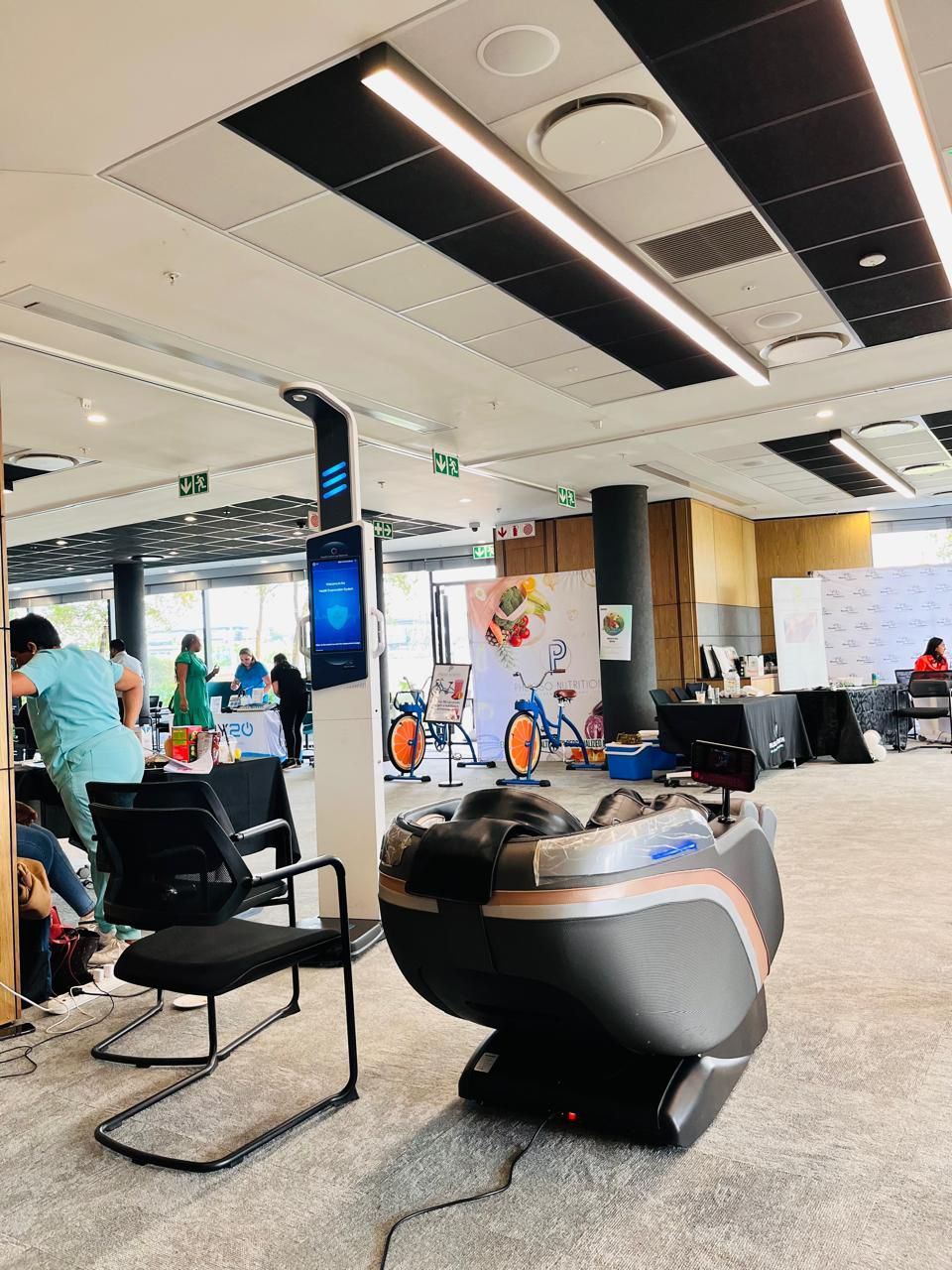
Productivity claims about workplace wellness interventions are usually vague. Chair massages are a useful exception — the mechanism is physical, the effect window is short, and the metrics are trackable. This article sets out exactly how chair massages lift productivity, and which numbers HR should capture to prove it to finance.
The mechanism
Productivity loss in desk-bound work comes from three measurable sources: physical discomfort (neck, shoulder, back tension), cognitive fatigue (the afternoon slump), and stress-driven distraction (email anxiety, meeting fatigue, deadline pressure). A chair massage hits all three.
Physically, a 15-minute upper-body session releases the muscle groups that drive discomfort and posture compensation. Cognitively, the parasympathetic shift acts as a focus reset comparable to a short nap — without the grogginess. Stress-wise, the cortisol drop creates a measurable easing of the rumination loop that drives unproductive task-switching.
How long the effect lasts
The peak effect window is 2–4 hours post-session. Focus, mood and physical comfort are noticeably elevated through the afternoon, then taper back to baseline by the next morning. For sustained productivity benefit, the right cadence is monthly (not annual) — which is why the most ROI-positive booking shape is a standing monthly retainer, not a once-a-year wellness day.
The metrics HR should track
- Pre/post mood score (single-question survey at slot booking and slot end)
- Slot uptake rate (should be 80–95% — flag if not)
- Self-reported afternoon focus (single-question post-event survey at 4pm)
- Manager-reported team meeting energy in the 2–4pm window on session days
- Engagement-survey question on 'company cares about my wellbeing' (annual lift)
- Sick-day rate in months with vs without a chair massage slot
- Retention signal in exit interviews (mention as a 'will miss' factor)
A realistic ROI calculation
For a 200-person South African office running a single therapist for a 4-hour monthly slot at ~R5,000/month, the cost per session-engaged employee works out to roughly R250–R280. A conservative productivity lift of just 30 minutes of recovered focus across the 20 staff who attend equals 10 person-hours per session. At an average loaded cost of R350/hour, that's R3,500 of recovered productivity per session — before counting the engagement, retention or absenteeism effects.
Why most companies under-spec the booking
The most common mistake we see is under-staffing a wellness day chair massage station — one therapist for 200 staff, which produces 90-minute queues and disappointed attendees. The right shape for a 200-person wellness day is 3 therapists for 6 hours, which covers everyone with comfortable wait times. The incremental cost is small; the experience difference is enormous. Under-spec'd is worse than not booked.