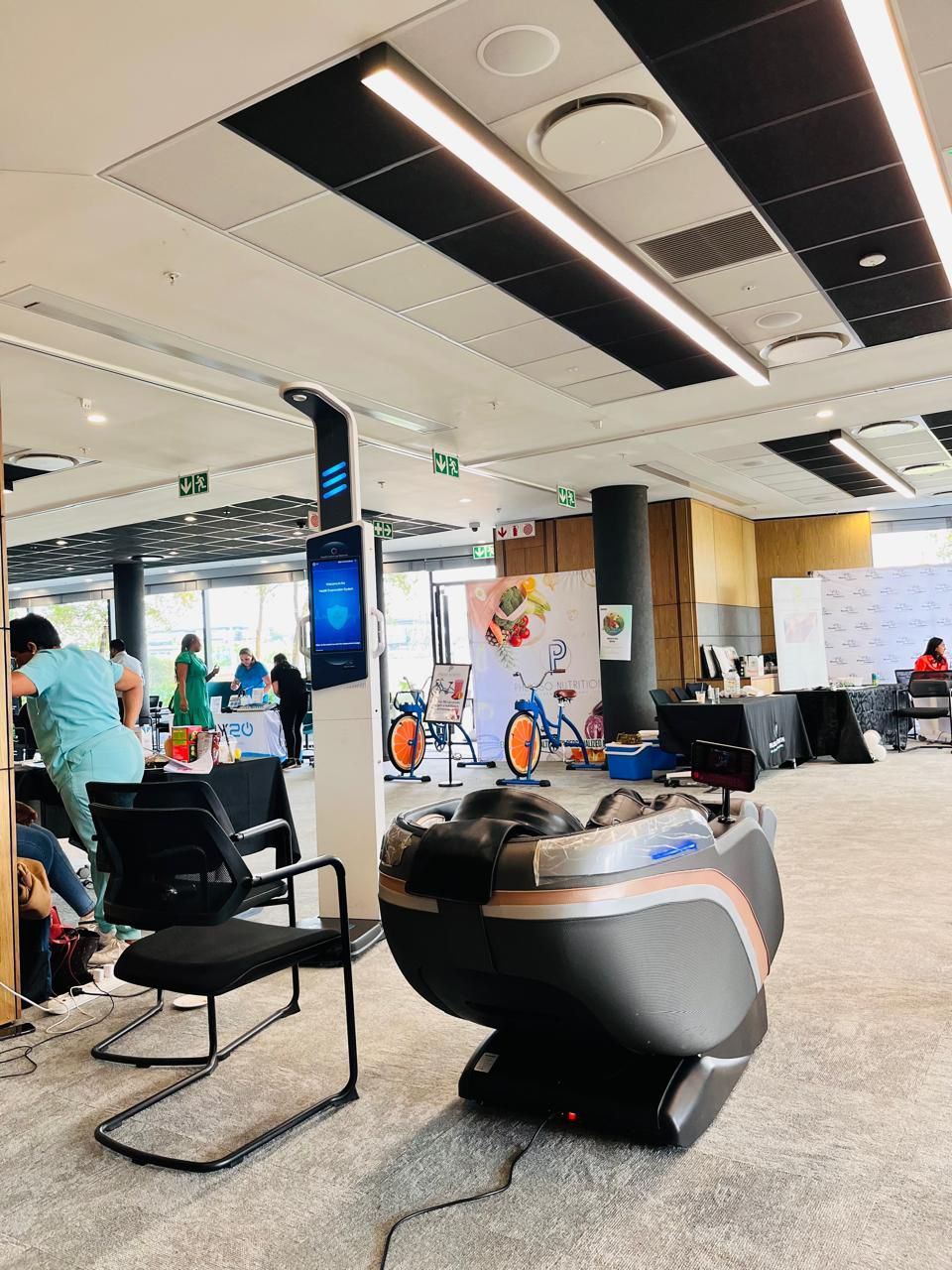
Chair massages are the rare corporate wellness intervention that survives a finance review. They have the highest staff uptake (80–95%), the lowest cost per engaged employee, and the most consistent post-event satisfaction scores of any wellness day activation we run across South Africa. This article explains why.
What chair massages do, physically
A 15-minute on-site chair massage targets the upper trapezius, levator scapulae, rhomboids, cervical paraspinals and the muscles of the forearm — exactly the cluster of muscles that knot up after hours at a desk. The effect is immediate and measurable.
- Reduced muscle tension in the neck, shoulders and upper back
- Improved range of motion in cervical rotation and shoulder elevation
- Decreased forearm and wrist stiffness (early-stage RSI relief)
- Tension-headache relief — the most-reported post-session feedback
- Lower-back stiffness reduction from prolonged sitting
What chair massages do, psychologically
The physical release triggers a parasympathetic nervous-system response — cortisol drops within the session, heart-rate variability improves, and the felt experience is one of calm and clarity. Employees report better mood, easier social interaction, sharper afternoon focus, and noticeably better sleep that same night.
The psychological effect compounds. Staff who've had a chair massage in the morning behave differently in the afternoon — calmer in difficult conversations, slower to escalate, more present in meetings. That's why the most-requested re-booking shape is a standing monthly slot rather than an annual wellness day.
What chair massages do, organisationally
This is where finance teams start paying attention. In South African corporates we've worked with, the measurable organisational benefits include:
- Higher attendance at wellness days (chair massages routinely double turnout)
- Improved engagement-survey scores on 'company cares about wellbeing'
- Reduced stress-related absenteeism in months where a chair massage slot was run
- Stronger retention signals in exit-interview data (cited as a 'will miss' factor)
- More positive Glassdoor and social-media mentions of the wellness offering
Why the uptake is so high
The barrier to entry is zero. Staff don't change clothes, don't shower, don't commit to a long session, and don't need any prior experience. The format is fully clothed, public, 15 minutes, and unmistakably useful. Compare that to a yoga class (change of clothes, sweat, public exercise anxiety) or a meditation session (sitting still, doing nothing, social discomfort) and the uptake difference is structural, not cultural.
The South African context
Three local factors make chair massages particularly effective in South African workplaces. First, long-commute culture (especially in Gauteng) means staff are already physically stressed by the time they reach their desks. Second, the wellness day calendar is dominated by October wellness month, where high-uptake activations dramatically outperform low-uptake ones in HR ROI reporting. Third, the local therapist market is mature enough to support multi-therapist multi-day bookings without out-of-town travel cost.
What HR teams should do with this
Start small — one half-day booking for one team. Measure uptake (it'll be 80–95%). Measure post-event sentiment (it'll be #1 of your wellness day stations). Then graduate to a quarterly cadence, and finally to a standing monthly retainer once finance signs off the line item.
The pattern of adoption we see across South African corporates is consistent: one booking, one quarter, one year, then locked into the wellness calendar permanently.